Previously in Part 1, we explored how the trillions of microbes in our gut affect everything from our immunity to mental health, and why gut issues are on the rise across Asia. But what actually is the reason behind this, and how can we make it better?
What Causes Poor Gut Health?
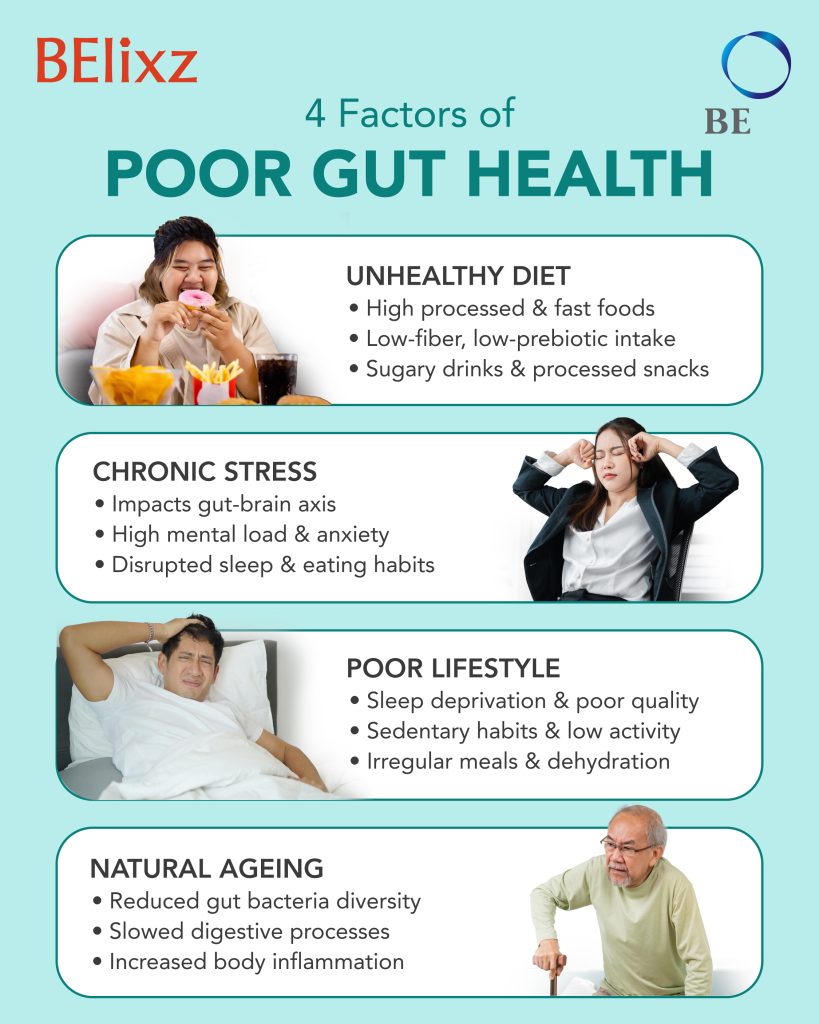
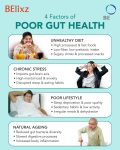
Modern lifestyle habits are often associated as factors that influence gut health. These are the four most significant ones.
1. Unhealthy Diet
When we consume a lot of processed foods, sugary drinks like the bubble tea, fast foods, which have not enough fiber, this can affect our gut health negatively. The balance of bacteria inside our gut will be thrown off when the gut doesn’t get enough prebiotics, probiotics, or postbiotics.
2. Stress and Mental Health
Our gut and brain connect to each other all the time, and scientists call this the “gut-brain axis.” When we are stressed, our stomach really feels it. It affects our digestion and the balance of the good bacteria.
Many people in Asian cities are working long hours, don’t get enough sleep, and feel a lot of stress. All these factors are hurting our gut health.
3. Poor Sleep and Inactive Lifestyle
Not getting enough sleep and staying inactive aren’t just bad for energy, they hurt our gut too. When we don’t sleep well, our body releases more cytokines, which boost inflammation and make the gut less friendly for good bacteria, while giving bad bacteria a chance to thrive.
If we sit for too long, for example if we are working in the office, our gut slows down. This will lead to bloating, constipation, and more of the bacteria that is harmful. A 2026 study by Wang, Wei et al. confirms that long hours of sitting damages the gut wall and triggers body-wide inflammation.
4. Ageing
As we get older, the good bacteria in our gut decreases. We may lose some good bacteria, like Bifidobacterium and those that produce short-chain fatty acids (SCFAs), which keep your gut lining healthy. This can lead to slower digestion, less variety of good bacteria, and more inflammation.
How to Improve Our Gut Health Naturally

People used to eat loads of seasonal fruits, veggies, and fermented foods. Now, urban diets are mostly refined carbs, unhealthy fats, and processed foods—this “modern menu” starves your gut microbes, killing off diversity.
We recommend these daily habits that you can follow:
• Eat more foods packed with fiber—think vegetables, fruits, whole grains, and legumes
• Eat fermented foods—like yogurt, kimchi, tempeh, kefir, and miso
• Take the gut health supplement that combines prebiotics, probiotics, and postbiotics
• Reduce the intake of processed foods, especially sugary drinks and snacks
• Exercise regularly to keep our stress level healthy
• Get enough sleep (aim for 7–9 hours a night)
• Move regularly – even small doses of daily exercise help
Restoring our gut takes the right balance of prebiotics, probiotics, and postbiotics:
- Prebiotics: Think this as the food for the good bacteria. They help those bacteria produce good compounds that support our health.
- Probiotics: Are the good bacteria itself. They help to reduce bloating and improve digestion. Fun fact: About 70% of our immune system is in our gut. That’s also the importance of probiotics, which help support our natural defense system.
- Postbiotics: Are the helpful substances made when good bacteria digest prebiotics. Postbiotics improve our gut lining, help keep our gut barrier strong, and support a healthy inflammatory response.
Changing our diet and lifestyle is the foundation, but the right gut health supplements, especially those that combine all three – prebiotics, probiotics, and postbiotics can really help balance your microbiome.
Reclaiming Your Gut Health
Our gut is not only for digestion. It plays a much more important role in our immunity and overall well-being. Understanding what our gut needs while improving our daily habits bit by bit will give a positive impact to our health for years to come.
References
- Bai, Xiaowu, et al. “Landscape of the Gut Archaeome in Association with Geography, Ethnicity, Urbanization, and Diet in the Chinese Population.” Microbiome, vol. 10, no. 147, 2022.
- Wang, Wei et al. “Effects of functional dietary fiber supplementation combined with home-based exercise on gut microbiota diversity and low-grade inflammation in urban sedentary adults.” Frontiers in nutrition vol. 13 1769785. 4 Mar. 2026
- Canani, Roberto Berni. “Potential Beneficial Effects of Butyrate in Intestinal and Extraintestinal Diseases.” World Journal of Gastroenterology, vol. 17, no. 12, 2011, pp. 1519–1528.
- Chen, Xuejie, et al. “Evolving Trends and Burden of Inflammatory Bowel Disease in Asia, 1990–2019: A Comprehensive Analysis Based on the Global Burden of Disease Study.” Journal of Epidemiology and Global Health, vol. 13, 2023, pp. 725–739.
- Fu, J., et al. “Dietary Fiber Intake and Gut Microbiota in Human Health.” Microorganisms, vol. 10, no. 12, 2022, article 2507.
- Ghosh, N. “Guardians Within: Cross-Talk between the Gut Microbiome and Host Immune System.” World Journal of Gastrointestinal Pathophysiology, 2025.
- Gómez, C. V. G. “Prebiotic Probiotic Postbiotic Evolution in Food: Latin America Caribbean Trends Regulations.” Archivos Latinoamericanos de Nutrición, 2025.
- Leeuwendaal, Natasha K., et al. “Fermented Foods, Health and the Gut Microbiome.” Nutrients, vol. 14, no. 7, 2022, article 1527.
- Owolo, O. “Urbanization-Induced Gut Microbiome Dysbiosis and Type 2 Diabetes in Sub-Saharan Africa: A Systematic Review of Mechanisms and Indigenous Therapeutics.” Preprints, 2026.
- Recharla, N., et al. “Gut Microbial Metabolite Butyrate and Its Therapeutic Role in Inflammatory Bowel Disease: A Literature Review.” Nutrients, vol. 15, no. 10, 2023, article 2275.
- Vinderola, G., et al. “Frequently Asked Questions about the ISAPP Postbiotic Definition.” Frontiers in Microbiology, vol. 14, 2024, article 1324565.
- Yurtseven, B. “The Role of Intestinal Microbiota and Immune System Interactions in Autoimmune Diseases.” ImmunoTargets and Therapy, 2025.